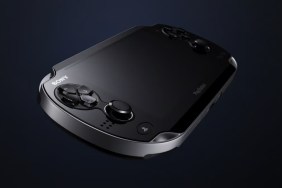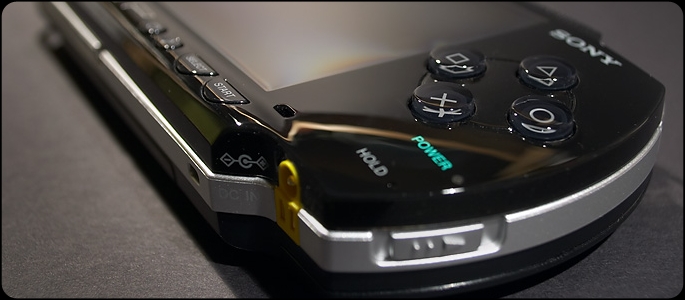
Ars Technica has done some digging and found that as far as handheld game systems go, backward compatibility can have a noticeable impact on the mass market appeal. Sony Worldwide Studios President Shuhei Yoshida, however, cites an exception for PS Vita, saying that as far as the North American market goes, including Japan’s PSP UMD Passport Program would not be worth the trouble.
Citing the research document “Market leadership through technology – Backward compatibility in the U.S. Handheld Video Game Industry“, AT points out:
After running the numbers, the authors found that “one extra game title for the current generation has the same impact on demand as 82,979 game titles sold for the parent generation.” In other words, the 45.6 million North American Game Boy Color cartridges floating around when the Game Boy Advance was released were worth as much as 550 additional launch games for the new system (for context, the Game Boy Advance didn’t actually get 550 distinct games until August 2004, about three years after its North American launch).
For the Vita, the impact may be even greater. According to NPD, there have been 84.5 million retail PSP games sold in the United States. If all those titles were easily playable on the Vita, it would be as if the system were launching with over 1,000 distinct titles, according to the model. That’s quite a hypothetical boost, considering the system is actually launching with just 25 titles.
But Sony’s Yoshida is quick to point out things that the data doesn’t reflect, such as the difference between the Japanese and North American PSP markets. He tells Wired:
The system has been introduced in Japan, where there is a much larger demand for PSP games. When you look at the release schedule of new titles there are still lots of PSP games being released in Japan and being announced for release. Lots of people who are interested in trying Vita are also interested in playing PSP games that they might purchase before Vita comes out, and will not necessarily choose the digital version. So there is a lot more demand… to introduce a program like that.”
Yoshida elaborates:
So there is a lot more demand … to introduce a program like that. The other point is that when you look at PSP titles sold digitally in the States or Europe, games are sold for a really reasonable price. You can buy Final Fantasy Tactics for $10. That’s a great price. There are many, many games that are sold at an affordable price. Because people in Japan are not getting the digital copy for free, because it costs us money to develop and maintain the system so we are asking people to pay somewhere between $5 and $10 to receive the digital copy in addition to what they have on the UMD. When you compare that to the price of games here, PSP games in Japan are sold at a much higher price, so people see the value in spending the $5 to $10 to get the digital copy. But when the games are already sold at a lower price in the U.S. we see less value in introducing that kind of system. The combination of the new titles available, or the lack of, and the price difference, the company decided to do that.
AT, meanwhile, acknowledges a few things being incomplete about the research that can even be done up to this point:
While this paper gives a veneer of statistical rigor to measuring backward compatibility’s impact, there are obviously a lot of potential reasons not to take it too seriously. For example, the model is working from an inherently limited set of examples—there are only four portable console generations to consider in the 12 years the paper examines. For another, Nintendo was by far the dominant player in all four of those generations, usually facing extremely limited competition. Would other companies see the same impact from their own backward compatibility in different circumstances?
An example is given:
The best way to evaluate the paper’s model may be a counterfactual experiment that the authors themselves put forward. The premise: what if Tiger’s long-forgotten Game.com had somehow managed to be compatible with the original Game Boy’s massive library of cartridges, just like the Game Boy Color that it was competing with? What would the model say about the relative fates of the two systems if this one important difference were applied to reality?
Well, it turns out the feature may have actually been decisive in the console wars. According to the model, with the Game Boy library at its back, the counterfactual Game.com would have sold 230,000 more systems each month, eating away at 83,000 monthly Game Boy Color sales. After one year of this, the Game.com would actually have been the market leader with roughly 70 percent of portable game console sales, compared to about 23 percent for the Game Boy Color (the weakened Virtual Boy and Game Gear would have taken the remainder).
If Yoshida’s vision can become reality, however, all of this will be a moot point. The gang at Sony is by all reports digging in for the long haul with Vita, not letting it coast and expecting it to sell itself like they did with PSP:
We made a mistake as well — right after the PSP launch we were preparing for the PS3 launch, and that took a lot more resources. So we shifted development resource away from PSP to and that contributed to the lack of business return coming from piracy for third parties really helped reduce the number of new games. But compared to that in Japan, there are other factors which helped the portable game. Ironically, in the development in Japan, developers in Japan struggled to jump on the current-gen home consoles, the high-end graphics, shaders, multi-core architecture. The enormous resources that are required to create titles for those home consoles of today.
The next couple of years will tell the tale of which decisions were good, which were bad, and which were somewhere in between. History is being made right now, as the Vita launches in Europe and North America.